

Table of Contents
Introduction
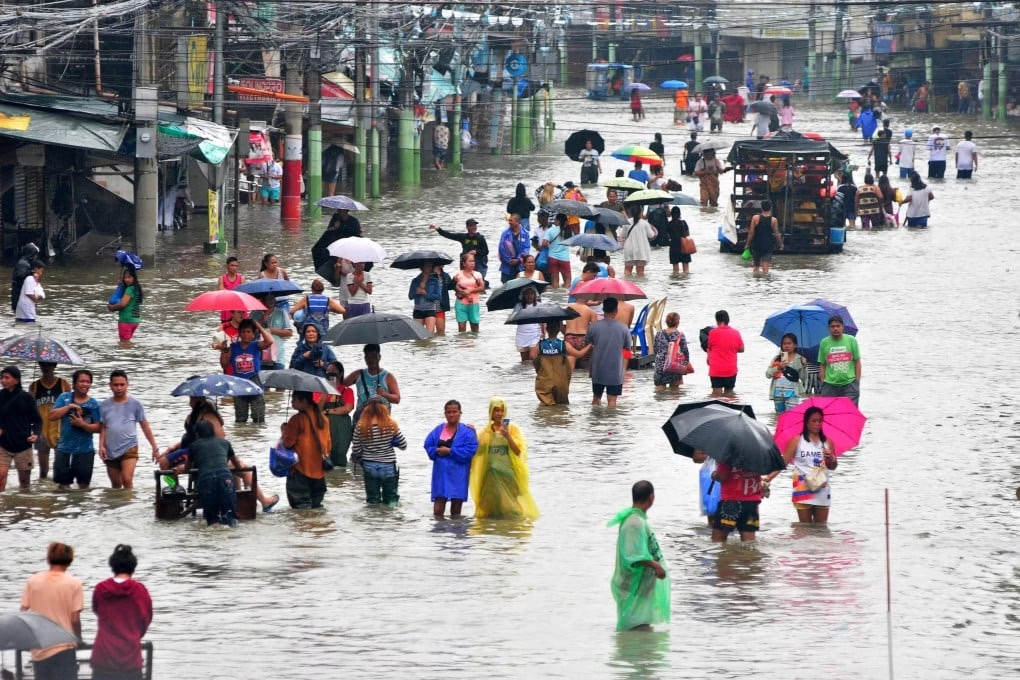
Baha ang literal, pero mas malala yung baha ng receipts. Billions poured into flood control since 2022, yet Metro Manila and nearby provinces still went under after a few days of ulan. While families waded through knee-deep water, social feeds were full of politicians’ kids and contractor heirs flexing private jets, designer bags, and car collections. The nepo baby outrage did not come from nowhere, it came from watching public money rush like rainwater while accountability moved at a crawl. This piece will map the money, the players, and the choices that keep us soaked so we can finally ask the right questions and push for fixes that actually keep our homes dry.
What’s happening right now

Congress and the Senate are grilling agencies and contractors over alleged “ghost” and substandard flood control projects, while the President says he’ll set up an independent commission to go after anyone who stole or wasted public funds. The Commission on Audit has begun a full performance COA audit of flood programs, with on-site checks and geotagged proof. Lawmakers point out the scale is massive this year alone, with more than ₱308 billion poured into flood works. Over at DPWH, Secretary Manuel Bonoan resigned and Vince Dizon stepped in to “clean house,” even asking for courtesy resignations from officials across the department. These moves are happening in real time, with hearings broadcast live and agencies under pressure to show receipts.
Why it matters
Recent storms slammed communities again, leaving millions affected and at least 26 dead — proof that weak defenses can turn every downpour into a crisis. Some “mitigation” builds reportedly made flooding worse, which is unforgivable when lives and livelihoods are on the line. This is not just about bad governance, it’s about public safety during every typhoon Philippines season and the country’s disaster response when homes, roads, and schools go under water.
Follow the money: where did the flood funds go
Let’s get the numbers straight so walang kuda-kuda. From July 2022 to May 2025, government funded about 9,855 flood-control projects worth roughly ₱545 billion, according to PCIJ’s analysis of official records. For 2025 alone, the sector got over ₱308 billion, which tells you the scale of what’s at stake every time it rains. These aren’t small pothole budgets — this is big-league public works money.
Here’s the kicker: isang maliit na circle ang kumopo ng malaking bahagi. Reports say only 15 contractors cornered about 20 percent of flood-control funds in the last three years — north of ₱100 billion — while thousands of other accredited firms split the rest. Concentration like that raises every red flag in procurement and invites questions about how awards were decided.
If you want receipts, start with the PCIJ dataset. It maps out who won what, where the awards clustered, and which firms have links to political families or lawmakers. Treat it as your baseline when checking any claim about winners, districts, or “priority” projects. Cross-reference this with agency postings and COA memos for a clear picture.
Red flags to explain simply
Before tayo malunod sa jargon, here’s a quick guide to the usual sakit ng ulo in these projects:
ghost projects Philippines, COA audit
- License renting schemes. Smaller players allegedly “rent” higher-grade licenses from top-tier firms to qualify on paper, which can mask real capacity and lead to shoddy builds. PCAB rules explain why licensing matters and why this practice is problematic.
- “Ghost projects.” Marked as completed and paid, pero either hindi naitayo or walang makitang output on site. This pattern showed up in past scams and is among the allegations in the current probes.
- Poor specs and shortcuts. Think sheet piles shorter than required, weak foundations, or wrong siting that can worsen overflow. Lawmakers and auditors flagged substandard or unfinished works in ongoing hearings.
The “nepo baby” backlash on social media
While people were scooping floodwater out of their salas, feeds were filled with private jets, luxury hauls, and car-collection tours from contractor heirs and politicians’ kids. Youth groups and creators called them out, and a wave of “lifestyle checks” spread online. Subreddits like r/lifestylecheckPH started cataloging the flexing, adding fuel to the outrage. Coverage ties the spike in callouts to ongoing probes into failed flood control works and the sheer size of the budget at stake.

Concrete examples reported by reputable outlets
- Lavish posts tied to contractor families. SCMP highlighted influencer posts from children of contractors and political clans that struck a nerve during the flood crisis, noting Reddit threads where users compile screenshots and timelines.
- Youth advocates speaking up. News5 reported on GoodGovPH publicly criticizing “nepo babies” for flaunting wealth amid investigations, framing it as a governance issue, not envy.
- BIR and customs attention. Lifestyle features and news reports noted families under scrutiny for high-end cars and luxury items, coinciding with tax and customs inquiries. Philstar Life, for example, reported on the Discaya-linked firms and a probe into a garage of dozens of luxury vehicles.
The point is not to trial anyone via posts. It is to show how online flexes collide with a national scandal about flood control money. When people are knee-deep in baha, a jet vid or price-tag OOTD lands like a slap, and public pressure on officials and agencies surges. SCMP’s piece connects the timing: backlash intensified alongside hearings and orders to investigate failed projects.
What your readers should watch for in posts
Spot the patterns that keep showing up during hearings or audit updates: price-tag OOTDs, jet videos, garage tours, Paris shopping, and “soft launch” flexes that suspiciously drop near key inquiry dates. None of these prove a crime by themselves, pero they shape perception and push institutions to move faster. Treat posts as leads, not verdicts, and always look for corroboration in reports, hearings, and audits. SCMP’s coverage explicitly frames these as online reactions tied to the scandal, not courtroom evidence.
Big names and moving pieces (stick to what’s on record)
DPWH leadership. Manuel Bonoan is out and Vince Dizon is in, with Malacañang tasking him to run a “full organizational sweep.” Within hours, Dizon told officials to prepare courtesy resignations as part of a clean-up and revamp. That’s on top of congressional scrutiny already zeroing in on district offices flagged for alleged ghost or substandard works.
COA moves. The Commission on Audit ordered a performance audit of flood control programs and, before that, technical inspections that require videos and geo-tagged photos to prove projects actually exist. Initial priorities include Bulacan and the NCR, with COA also signaling it will file cases tied to anomalous builds. Lawmakers have been told to expect findings in phases, with teams coordinating across performance and fraud units.
Congress and Senate heat. The House infrastructure panel and the Senate blue ribbon committee are holding televised hearings that put contractors and officials on the spot about project lists and visible wealth. At least one contractor invoked the right against self-incrimination when pressed on alleged “ghost” contracts and luxury assets. Expect more subpoenas and contempt citations as committees chase paperwork and site photos.
Contractor profiles. Investigations show a tight cluster of big winners and mixed performance records among top suppliers, with some firms linked to political families. PCIJ’s dataset is the clearest public map so far of who bagged what and where the awards concentrated since 2022. Use it to cross-check any claim about favored bidders or districts.
How the alleged schemes burn the public

Money leak 1: “ghost” projects and padded costs.
Kapag binayaran ang proyekto na hindi naman nai-build, literal na ninanakaw ang pondo na dapat pang-drain ng tubig sa kalsada at bahay. Current probes flag alleged “ghost” flood works and report that some builds meant to help actually worsened flooding in places already hit by storms. That is money gone, communities still underwater.
Quick explainer: “ghost project”
Government paperwork says “completed” and “fully paid,” pero sa site, wala o kulang ang gawa. It’s a term long used in PH corruption cases and is now central to the flood-control probes.
Money leak 2: substandard specs that fail under real rain.
Think sheet piles way shorter than the plan. In Batangas, inspections found piles along the Binambang River measuring only about 3.9 to 5.5 meters when the requirement was 15 meters, with DPWH now replacing them at the contractor’s expense. In Cebu, a newly built PVC sheet pile section collapsed and will be swapped out for steel. Kung ganito kalaki ang shortcut, huwag na tayong magtaka kung bakit mabilis bumigay ang riverbanks.
Money leak 3: award concentration and weak performance.
A tight circle of contractors bagging a huge slice of flood budgets plus mixed ratings means better builders get iced out. PCIJ’s analysis shows heavy clustering among top awardees, with red flags on track records that should matter when lives downstream depend on workmanship. Result: overpriced, underbuilt defenses that can worsen overflow.
Explain the engineering side in plain language
“A floodwall is only as strong as its foundation.” Here’s the no-BS checklist your barangay can ask about, kasi hindi magic ang flood control:
- Soil study
Engineers must test the ground so the wall does not settle or tilt. Soft, silty beds need deeper or different foundations.
river engineering, geotechnical basics - Correct pile depth
Sheet piles should go deep enough to reach stable strata and interlock tightly. Plans even specify water-tight joints for sheet piles to keep seepage down. Shorter piles are basically invitations for scouring.
sheet pile design, riverbank protection - Drainage capacity
Channels, culverts, and weep holes must move water out fast. If the wall blocks flow without outlets, tubig will back up into homes.
urban drainage, hydraulic design - River hydraulics
Designs need to account for flow speed, bend effects, and debris loads during peak storms. Misplaced walls can speed up currents and eat away at unprotected banks.
flood risk, hydraulic modeling - Maintenance budget
Silt removal, vegetation control, joint inspections, and crack sealing need yearly funds. Without upkeep, even a good wall fails early.
public works maintenance, disaster preparedness
Shortcuts on any of these steps turn a “project” into a photo-op. When storms hit, the structure behaves like cardboard. That is why specs, tests, and length requirements are not paperwork drama, they are the difference between a barangay staying dry or going under.
Read next: Top 10 Richest Filipinos in 2025: A Comprehensive Update
What government says it’s doing now
Independent commission, hearings, and hotlines lighting up.
Malacañang says an independent commission will take point on the flood-control mess, while the House and Senate run nationally televised hearings that have put contractors and officials on the spot. AP also notes a public reporting website the Palace launched has been flooded with tips, a sign that citizens are paying attention and sending receipts.
COA’s audit playbook, in plain terms.
COA ordered a performance audit under its 2024 to 2026 plan and, before that, technical inspections that require on-site checks, videos, and geo-tagged photos to prove projects actually exist and match the work program. Those inspection reports feed into fraud audit teams for follow-through. Translation: less press release, more ground truth.
Leadership reset at DPWH.
Manuel Bonoan is out, Vince Dizon is in. Dizon has asked for courtesy resignations and said DPWH will gather evidence then turn it over to the independent commission instead of “investigating itself.” Expect internal reorg talk to grow. The real test is simple: will the paper trail end at the Ombudsman and the courts, with cases that stick.
What citizens can do (practical, non-performative)
1) Keep receipts that matter.
Screenshot or photograph project signboards with the contract ID, location, contractor name, and budget. During or after floods, take geo-tagged photos and short videos that show water levels near sites marked “completed.” Then submit to the government’s public tip channel. AP reported that the national reporting site is already getting swamped with submissions, and the Palace confirmed a dedicated “Sumbong sa Pangulo” portal for anomalous flood projects.
2) Cross-check what you see with official postings.
Match the details on the signboard to DPWH and COA records. Compare scope, timeline, and status. If the signboard says finished but your geo-tagged clip shows otherwise, attach both when you report. AP’s coverage notes that televised hearings are leaning on public leads, so well-documented tips actually travel.
3) Back the watchdogs doing the hard work.
Support local journalists and data teams publishing project lists and visualizations. Start with PCIJ’s flood-control dataset that maps 9,855 projects worth roughly ₱545B and shows where awards clustered. Share their pieces, send them clean leads, and cite them when you post.
4) Stay factual, not feral.
Do not harass private individuals. Treat luxury flex posts as context, not evidence. Stick to verifiable public records, sworn testimony, on-site inspections, and audited documents. This keeps your reports credible and keeps the focus on contracts, not personalities.
FAQs
Ano ba ang “ghost project”?
Isang government infrastructure na sa papel ay “completed” at “fully paid,” pero sa actual site wala o kulang ang gawa. Ginamit na modus ito sa PDAF pork barrel scam, at ito rin ang tawag ngayon sa ilang flood control na iniimbestigahan.
Bakit baha pa rin kahit may pondo?
Kasi kung sablay ang engineering, mali ang siting, barado ang drainage, o pangit ang materials, walang saysay ang bilyon-bilyong budget. May ulat na ilang proyektong dapat magpababa ng tubig ay lalo pang nagpalala ng baha, ayon sa coverage ng national inquiries.
May kaso na ba?
COA says it is preparing complaints against certain DPWH officials and contractors, with filings targeted “this month,” habang tuloy ang performance at fraud audits. Sundan ang Ombudsman at DOJ dockets para sa actual case status.
Totoo bang iilan lang kumukuha ng malaking share?
Oo, ayon sa reporting: around 15 contractors ang kumopo ng roughly one-fifth ng flood control awards mula 2022 to 2025. Iyan ang dahilan kung bakit malaking issue ang concentration sa public procurement.
May epekto ba ang social media call-outs?
Meron. SCMP notes na sumabog ang “nepo baby” backlash habang umiinit ang hearings, at nakitang kasabay nito ang aksyon mula agencies. GMA reports that Customs moved to probe a viral luxury car fleet tied to contractor families. Correlation is not causation, pero malakas ang timing at pressure.
Facts!
- ₱308B flood control allocation for 2025, per ongoing inquiries and budget briefings. AP News
flood control budget, Philippines typhoon season - ₱545B across 9,855 flood projects since 2022, with 15 contractors cornering about 20% of funds, a little over ₱100B. South China Morning Post
public procurement, contractor concentration - At least 26 deaths tied to the recent weather onslaught that fueled public anger and scrutiny. Star Tribune
disaster impact, storm fatalities - COA ordered a performance audit and on-site technical inspections with video and geotag proof as part of its 2024–2026 plan. GMA Network
COA audit, geotag inspections - DPWH leadership change: Manuel Bonoan resigned, Vince Dizon took over and called for courtesy resignations to start a clean-up. Philippine News Agency
DPWH leadership, courtesy resignations - PCIJ reports show tight award concentration and firms linked to political families among top takers, with datasets you can reference in copy. PCIJ.org
PCIJ dataset, political ties - Social channels and a Reddit community, r/lifestylecheckPH, began reuploading flex posts by heirs and kids tied online to the controversy, which added pressure during hearings. South China Morning Post
nepo babies Philippines, social media backlash